Beetle Launcheruser manual
Written for the BYD Sealion 7 (DiLink 5.0, Android 11). What is on each screen, and what every item in Settings does.
Installing
You only do this once. The exact commands are on the download tab of the home page.
It is easier from a phone
Put your phone on the same Wi-Fi as the car, connect to wireless ADB with one of these apps and install the APK straight from it. No computer, no cable.
From a computer
- Download the APK. There is a release build and a debug build; normally you want the release.
- Grant one permission. WRITE_SECURE_SETTINGS — with it, the launcher switches wireless ADB on by itself at every start.
- Make Beetle Launcher the home app. You do this under Settings › System.
AdbKick is built into the launcher. You do not need to install it separately, and if you already have it the launcher does not call it.
The screens
Swipe left and right between pages. Their order, and whether each is used, is set under Settings › Pages.
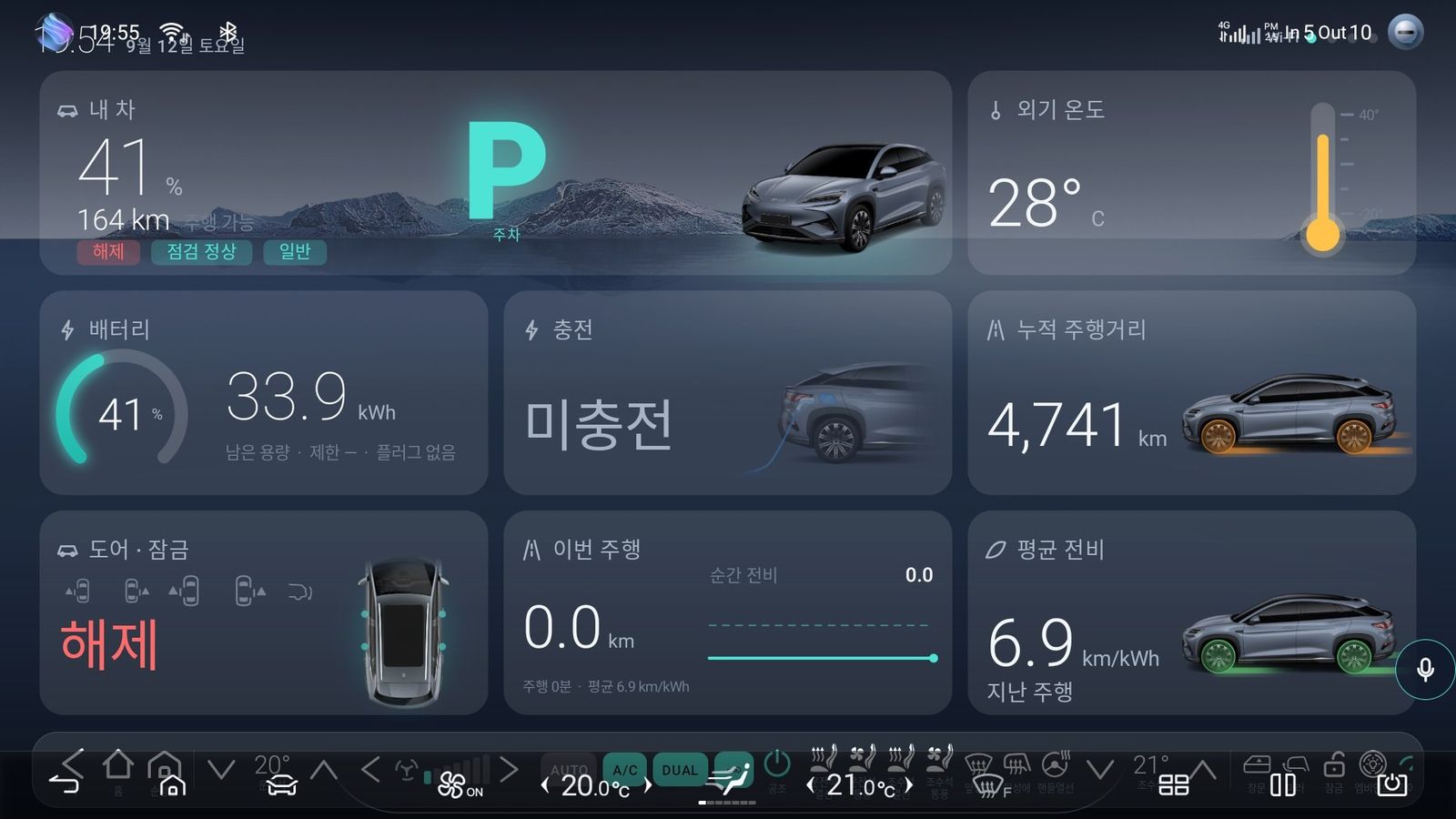
Dashboard — page 1
The first page: what the car already knows, laid out as tiles.
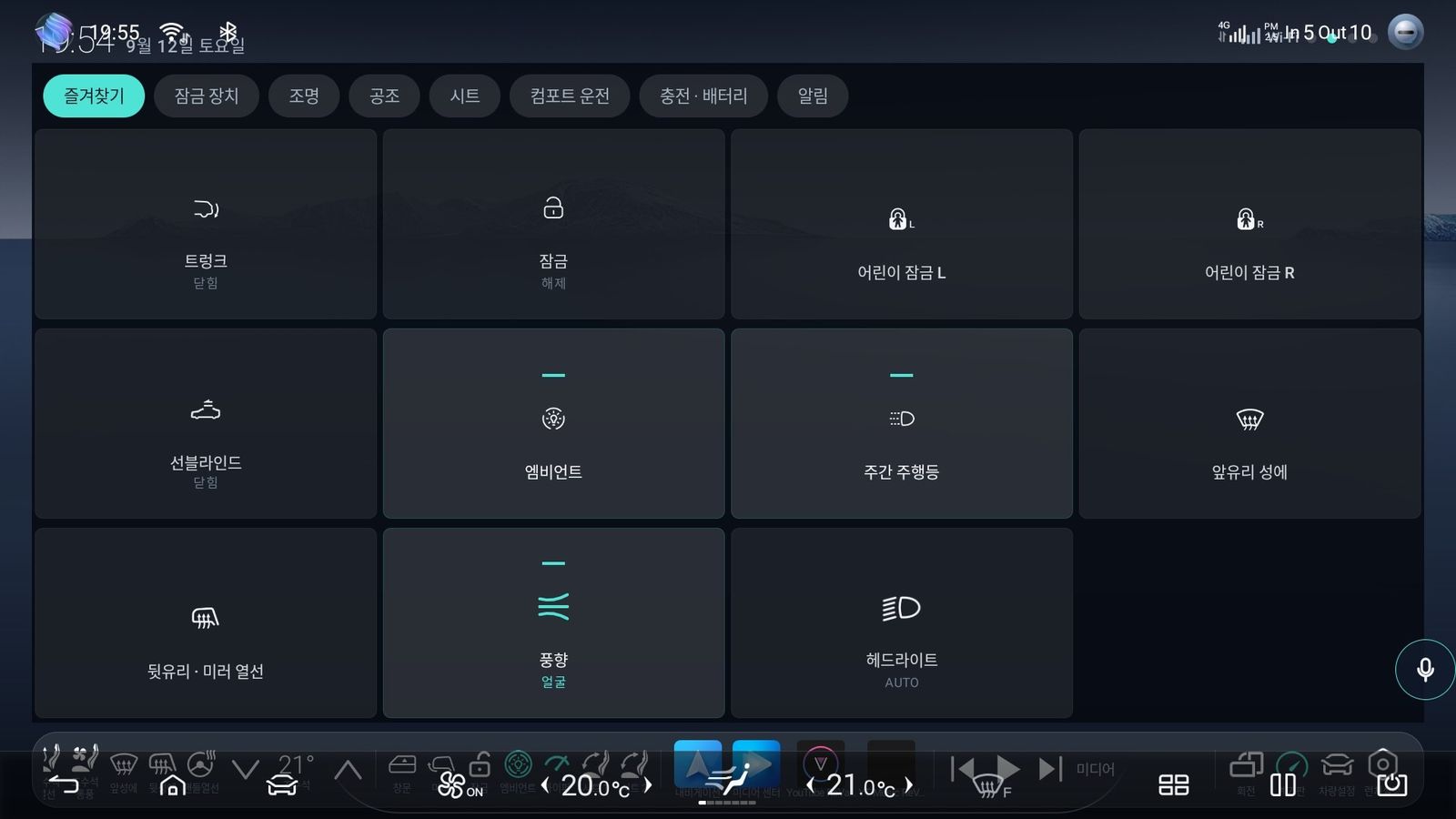
Vehicle controls — page 2
It calls the same public SDK the stock app uses. It does not touch firmware.
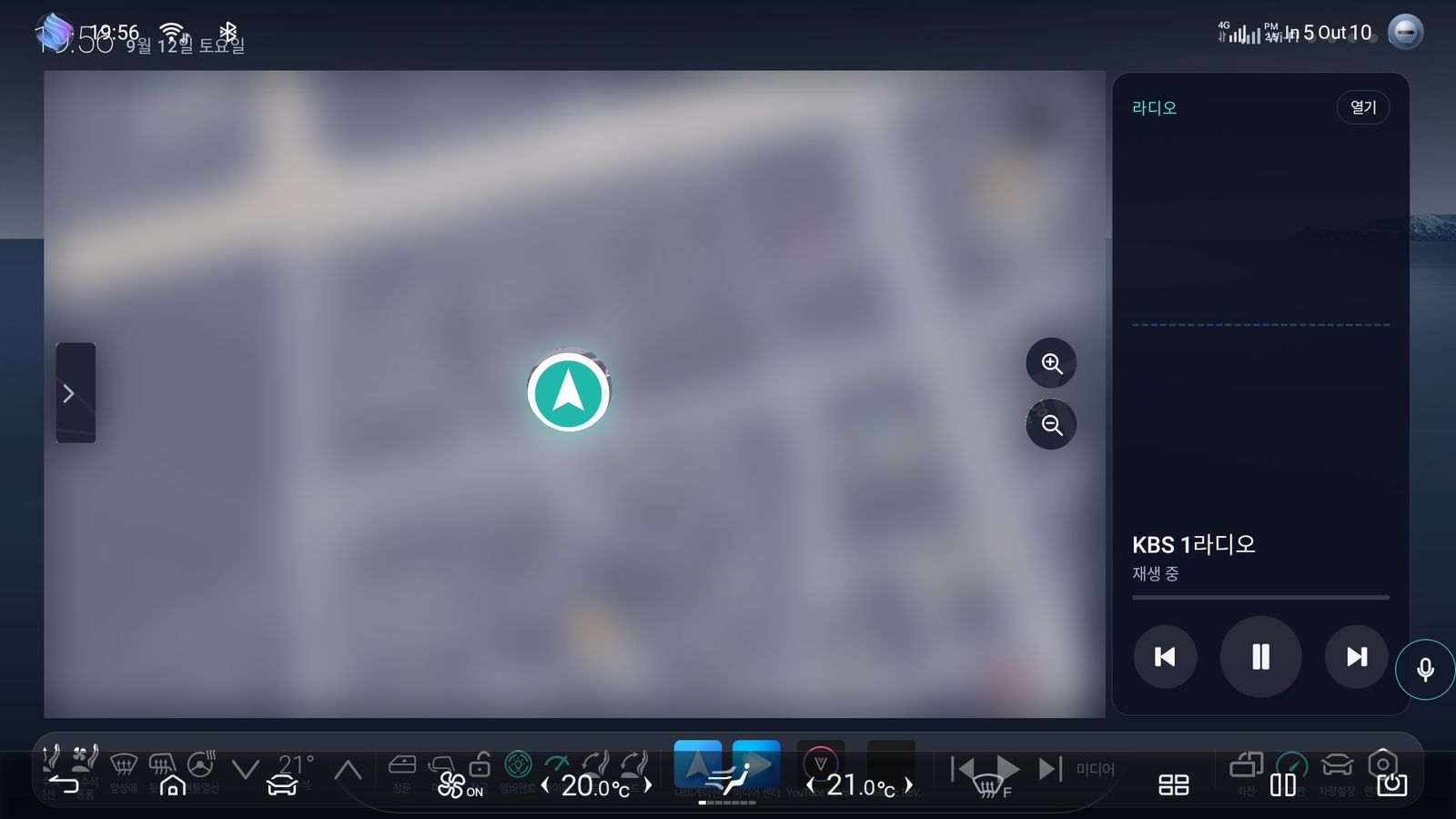
Navigation
Turn-by-turn guidance on Korean map data. It can be sent to the instrument cluster as well.
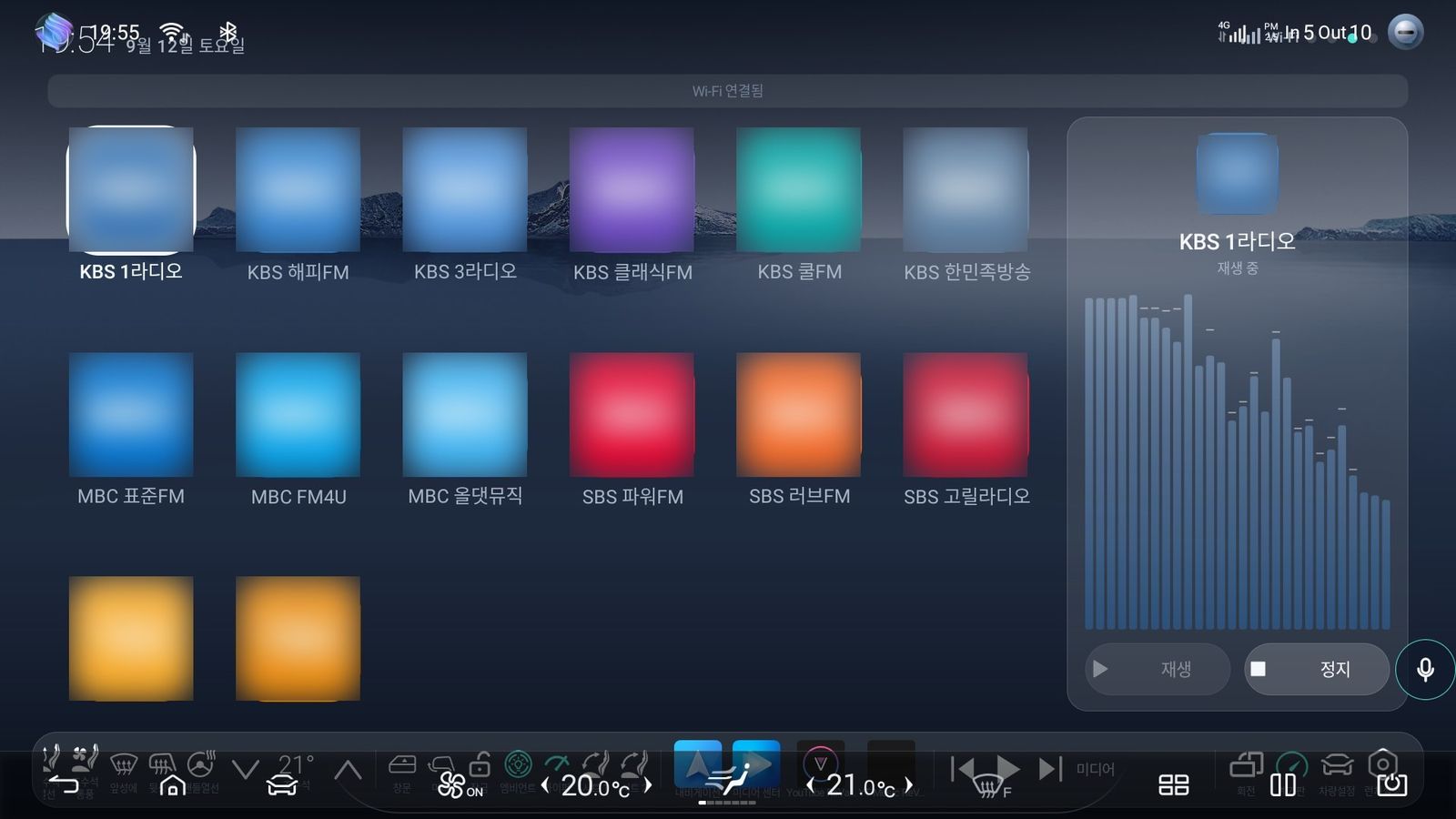
Internet radio
Korean stations over the internet. You can add and remove stations.
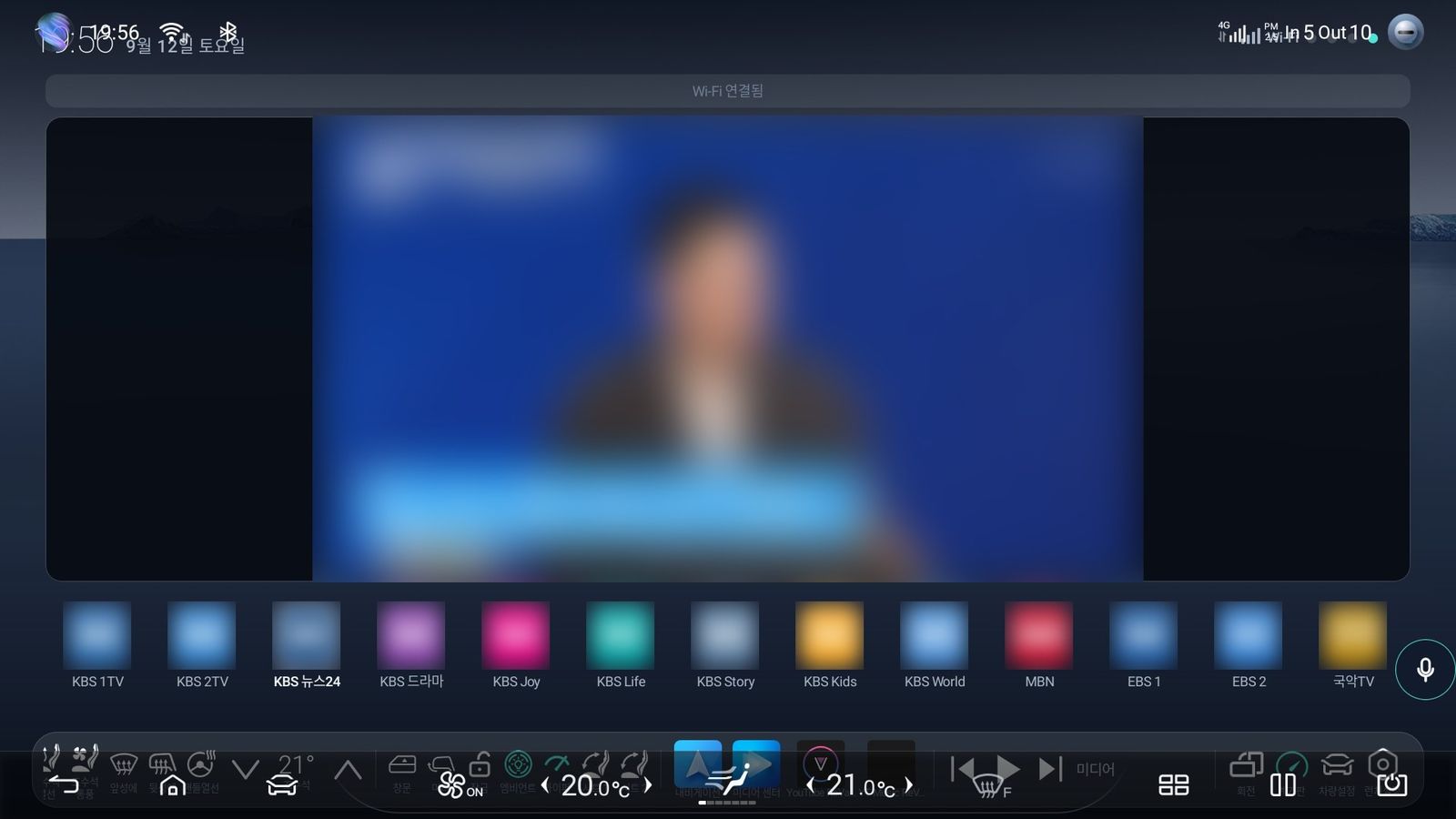
Internet TV
Live television on the centre screen. You can add and remove channels.
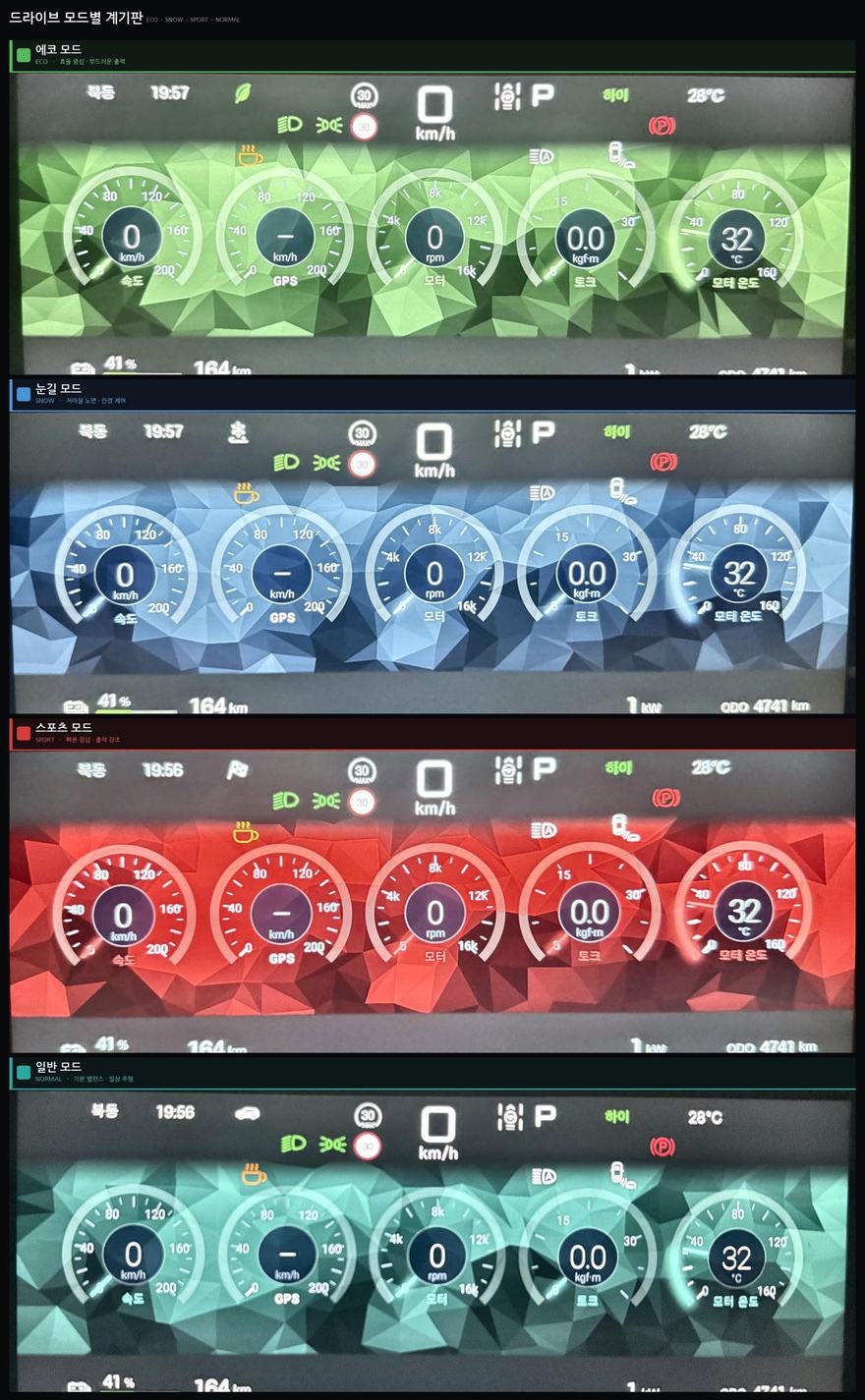
Instrument cluster — display 1
The screen beyond the steering wheel. The launcher puts its own screen up there, and the colours follow the drive mode.
Settings — screen by screen
Open “launcher settings” from the right-hand end of the dock. The list on the left is the screens; the right-hand side is that screen's items. Below is that list, in the same order.
System
Things that apply to the whole launcher — the home button, wireless ADB, language. This is the first screen to visit after installing. The first few rows are indicators, not switches: they show you the current state.
- Language
- The launcher's language. Set it to English and the speed-camera and navigation screens drop off the list — they depend on Korean data. Choose: 한국어 · English
- Region
- Which country the weather, maps and similar services look at. Choose: Korea · Overseas
- Accessibility service
- An indicator. It has to be on for the launcher to tap through stock screens for you. The first few rows of this screen are indicators like this — they show state, they are not switches.
- Wireless ADB
- An indicator: whether wireless ADB is on right now.
- Self-grant
- An indicator: whether the launcher holds the WRITE_SECURE_SETTINGS permission.
- Notification access (track info)
- An indicator. Without it the launcher cannot read the name of the track that is playing.
System setup
- Open ADB screen (portrait)
- Opens the stock ADB settings screen.
- Rotate to portrait when enabling
- For cars where the stock ADB screen only appears in portrait.
- Enable wireless ADB
- Turns it on right now.
- Self-grant via wireless ADB
- Grants the permission to itself. Once it has it, wireless ADB comes on by itself at every start.
- Gemini control
- Control the car by speaking. It needs a Gemini key.
- Gemini model
- Which model to use.
- Home button
- Where the home button takes you. Choose: Beetle Launcher · Stock home
- Back button
- What the back button does. Choose: Beetle Launcher · Stock home
- Default home = Beetle Launcher
- An indicator. If this is not set, the home key does not reach the launcher. Reinstalling the app clears it, so set it again then.
- Hand to another app
- Hands anything the launcher does not understand to the car's own voice assistant.
Split screen
- Split-screen support
- This car cannot put the home app into split screen. Hand the home role back to the stock launcher and Beetle Launcher can go into a split.
Dashboard
Picks the tiles on page 1. Drag them to reorder.
- Font
- The typeface for the whole launcher. It changes as soon as you pick one.
- Tile style
- How the tiles are drawn. Choose: Outline · Box only · None
- Top clock · date
- Whether to show the clock and date at the top of the first page.
- Wallpaper
- The wallpaper — the stock one, or one of six ATTO 3 stock themes.
- Full screen
- Hides the Android status bar and uses the whole screen.
Tile layout
Button: Reset layout
Cluster
Decides what goes on the screen beyond the steering wheel (display 1).
Speed tile gauges
Cluster screen
- Turn-signal camera
- Puts up the side camera on whichever side you signal.
- Cluster display
- Turn this off and the cluster screen is not used at all: the dials move to the cluster and leave the launcher.
- Keep cluster view
- When the car flips the cluster back to its own mode — the right-hand steering-wheel button does this — put our mode back once.
- Hold cluster
- When another app covers the cluster, put our screen back a moment later. Nothing arbitrates that screen — whatever drew last is what you see — so putting it back is the only defence.
- Stay above TMap
- Draws the cluster as an overlay window so it sits on top of TMAP's own cluster.
- Sport flame
- The cluster catches fire in Sport mode. It redraws at 20fps, so turn it off if it costs too much.
- Background type
- Where the wallpaper comes from. Choose: Solid · Stock background
- Solid color
- The colour used when the background is set to a flat colour.
- Darken photo
- Darkens the background photo so the numbers on top of it stay readable. Choose: 0% · 20% · 40% · 60% · 80%
Cluster gauges
- Speedometer
- How the speed itself is shown. Choose: Digital · Analog
- GPS speed
- Speed measured by satellite. It differs from the car's own speed by a few km/h. Choose: Hidden · Dial
- Motor RPM
- Motor revolutions. Choose: Hidden · Dial
- Motor torque
- Motor torque. Choose: Hidden · Dial
- Motor temperature
- Motor temperature. Choose: Hidden · Dial
Info panel
- Now playing
- The track that is playing.
- This trip
- Distance and efficiency for this trip.
- Tire pressure
- Pressure at all four wheels.
- Switch with wheel button
- Press the info button on the steering wheel to page through the panels — that button becomes our remote.
Three zones
- Three zones
- Splits the cluster in three so two info panels fit.
- Center info
- What goes in the middle of the cluster.
- Right info (initial)
- What the right-hand panel shows to begin with.
Car functions
The controls on page 2. “Edit items” picks which ones show, and automations run several of them at once.
- Style
- How the page-2 controls are drawn. Choose: Boxes · Icons
Button: Edit items
Automation
- Edit
- Pick what shows and what is hidden.
Button: Load examples
Button: Add sequence
Dock
The bar that is always at the bottom of the screen, whatever page you are on.
Dock row placement
- Bottom
- Whether the dock sits at the bottom of the screen. Choose: Bottom · Top
- Dock size
- How tall the dock is. Choose: Small · Normal · Large
- Show apps in dock
- Whether app icons sit in the dock.
- Icon labels
- Whether names appear under the icons.
- Media app
- Which app the music controls talk to.
- Dock apps
- “Edit apps” picks what goes in the dock.
Pages
The order of the pages you swipe between, and whether each one is used. Drag by the ≡ handle to reorder; switch one off to skip it.
Page order
Sound
The sounds that play when something happens — drive mode, gear, start-up, reverse.
When drive mode changes
- Mode voice
- Says the drive mode out loud when it changes.
- Sport exhaust sound
- Plays an exhaust note in Sport mode.
- Lower music during mode announcement
- Ducks the music while the announcement plays. An app cannot go louder than the system volume, so the only way to be heard is to make the music quieter.
When shifting
- Gear voice
- Says the gear out loud when you change it.
Wheel voice button
- Voice control with wheel button
- Use the voice button on the steering wheel to talk to the launcher.
On startup
- Greeting
- Greets you at start-up, with something that suits the time of day.
When reversing
- Reverse distance voice
- Reads out the distance behind you while reversing.
When pressing a switch
- Switch feedback
- What happens when you press a control. Choose: Sound · Voice
- Switch volume
- How loud that sound is.
Navigation
- Voice guidance
- Spoken navigation guidance.
Navigation
Route guidance, and sending that guidance to the instrument cluster.
My car marker
- Size
- How large your car's marker is on the map. Choose: Small · Normal · Large
- Image
- What the marker is drawn as. Choose: Car image · Arrow
Routing — Kakao
- Place search · routing
- What is used to find places and work out routes.
- Place search
- The side that looks up place names. Nominatim (OpenStreetMap)
- Routing
- The side that works out the route.
- OpenRouteService key
- The key used for routing outside Korea.
내비 페이지를 꺼 두었습니다 — 홈에 내비 페이지가 나오지 않습니다.
- Enable nav page
- Whether the navigation page is used.
- Reroute when off route
- Recalculates by itself when you leave the route.
- Route preference
- What the route should favour. Choose: Recommended · Fastest · Shortest
Driving view
- Map heading
- Which way the map is turned. Choose: Heading up · North up
- Perspective
- The angle you look at the map from. Choose: Flat · Tilted · Bird's-eye
Map style
- Map style
- Whether the map is light or dark. Choose: Default · Night · Gray · Satellite · OSM
- Map brightness
- How bright the map is drawn. Choose: Bright · Normal · Dark
- Map scale
- How large the map tiles are drawn. Raise it if the labels are too small. Choose: Normal · Large · More
- Prefetch country overview
- Downloads a country-wide map in advance. It takes a long time and a lot of space, and it can stall part-way.
- Prefetch frequent places
- Downloads only the map around the places you go often.
- Tile cache
- How much space the downloaded map takes. Clear it here.
Cluster
- Switch to HUD while guiding
- Turns the cluster into a guidance screen while a route is running.
Speed cameras
Speed-camera warnings, from Korean public data.
- Alerts on
- Turns the whole thing on and off.
- Chime
- Whether a chime sounds with the warning.
- Keep alert
- How many seconds the warning stays up.
Alert distance
- Stage 1
- How far ahead the first warning comes.
- Stage 2
- The distance for the second warning.
- Stage 3
- The distance for the last warning.
Data
- Cameras on file
- How many cameras are currently held.
- Last updated
- When the data was last fetched.
- Auto update
- How often the camera data is fetched again.
Button: Download now
Button: Import CSV file
Internet radio
The list of stations you can listen to.
- Internet radio
- Whether the radio page is used.
Stations
- Add station
- Add one by hand with a name and a URL.
- Import from file
- Reads a list in from a file.
- Reset to default list
- Throws away your changes and goes back to the list it shipped with.
No stations
- Fix
- Edit the list.
Internet TV
The list of channels you can watch.
- Internet TV
- Whether the TV page is used.
Channels
- Add channel
- Add one by hand with a name and a URL.
- Import from file
- Reads a list in from a file.
- Reset to default list
- Throws away your changes and goes back to the list it shipped with.
No channels
- Fix
- Edit the list.
API keys
The keys used by weather, maps and speed cameras. Everyone gets their own — a key shipped inside the apk leaks the moment the apk does.
- Kakao REST key
- Maps and route guidance.
- KMA weather key
- Weather.
- Gemini key
- Voice control.
- Speed camera key
- Speed-camera data, from Korean public data.
- VWorld key
- Map tiles.
- All at once via QR image
- Turns your keys into a QR code to carry to another car, or reads someone else's in.
API key backup
- Keep outside the app
- Keeps a copy outside the app so the keys survive a reinstall.
- Delete backup
- Deletes that copy.
About
Version and updates, and the record of what you agreed to.
- Version
- The version installed right now.
- Build
- The commit that build came from.
- Tag
- Whether this is a release or a debug build.
- Vehicle SDK
- Whether it is attached to the car's SDK.
- Default home
- Whether it is set as the home app.
- Device
- The car's device name.
- Display
- This screen's size and density.
Your agreement
- Agreement record
- When you agreed and to what. “Read it again” shows the text you saw at the time.
- ★Freeze recovery
- The last time the app froze and recovered by itself.
- Release update
- Checks for a new release build and fetches it.
- Debug build update
- Fetches a debug build by hand — it is never pushed automatically. If you are on a debug build, pressing “update to release” here takes you back to the release.
Support
Two QR codes to support the work. In Korea they are Naver Pay and KakaoPay; elsewhere, Buy Me a Coffee and Ko-fi. Scan one with your phone.
A little help with server and token costs keeps this going. Scan with your phone.
When it does not work
The home button still opens the stock screen
The default-home-app setting has been cleared. Reinstalling the app clears it. Check the “default home app” indicator under Settings › System and set it again.
Wireless ADB keeps turning itself off
Grant it once under Settings › System and the launcher switches wireless ADB on by itself at every start after that. Until then, turn it on by hand each time.
Another app covers the instrument cluster
Turn on “hold the cluster” under Settings › Cluster. When something covers it, the launcher puts its own screen back up a moment later. If you use TMAP as well, look at “pin above TMAP” too — though it does not work on every car.
Weather, maps or speed cameras are empty
There is no API key. Add one under Settings › API keys. Everyone gets their own — a key shipped inside the apk leaks the moment the apk does.
It will not update
Check under Settings › About — it tells you why it failed. If it still will not, the apk it downloaded is left in the Downloads folder, so you can install it by hand with a file manager.
Anything else
Which screen, what you did, what happened — with those three the cause can usually be found without the car. You can attach photos and a short video. → Report a bug